 Team Events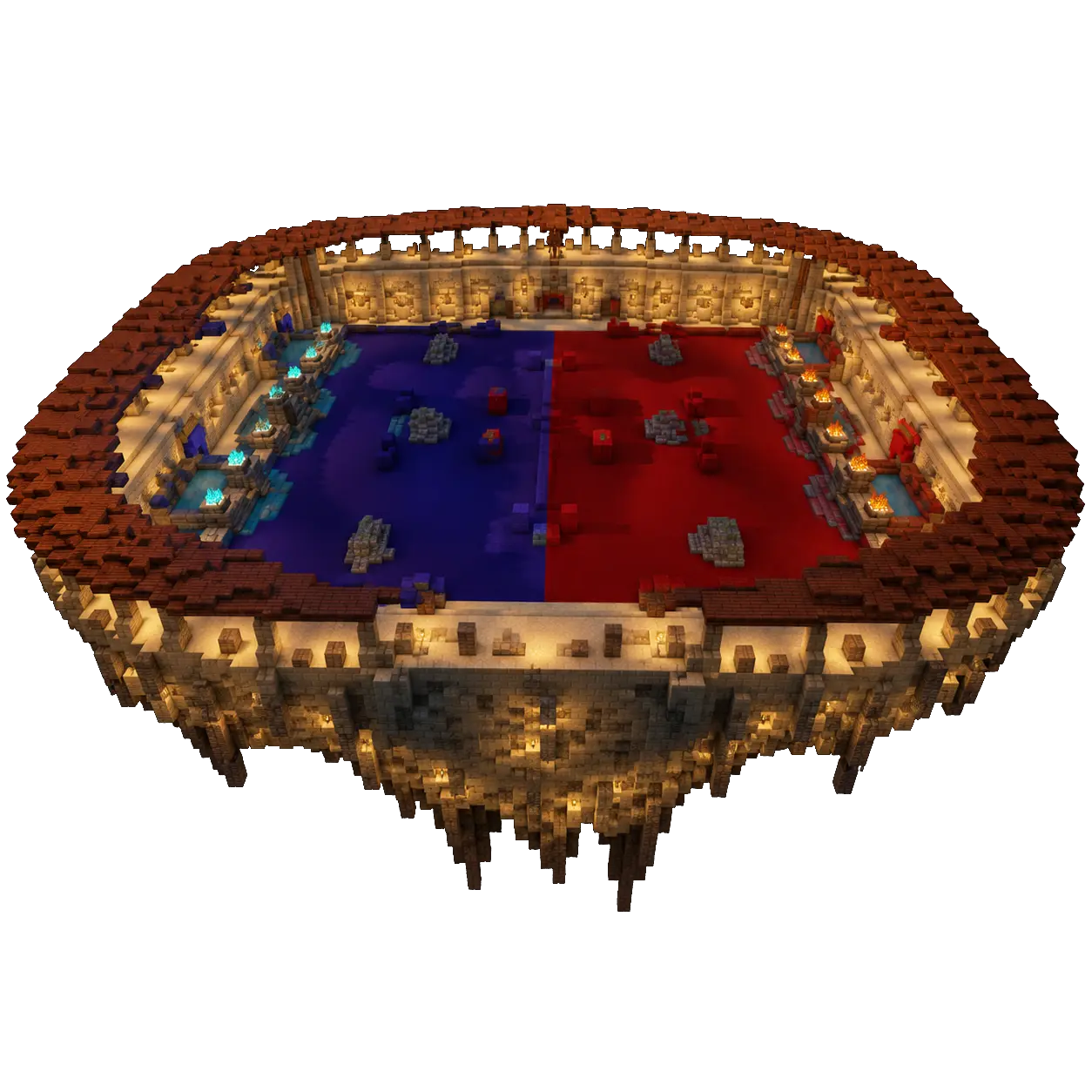
About Turf Wars
Overview
Turf Wars is a team-based territory control event where two teams fight to push their color across the arena. Each kill moves your team’s turf forward, while enemy kills can neutralize or reverse that progress.
The event is built around teamwork, class choice, building, and aim. Players must use the build phase to prepare defenses, then use the attack phase to score kills and pressure the enemy team.
Turf Wars is not only about getting kills. Good walls, smart positioning, class changes, and protecting your side of the arena can decide the match.
How to Play
At the start of the event, players spawn on their team’s side and choose a class. You can play as either a Knight or an Archer, and both classes receive wool at the same rate.
The event begins with a build phase, where players can place wool on their own team’s side. This is the time to create walls, cover, and safe angles before the fighting begins.
After the build phase, the event switches to an attack phase. During this phase, players fight the enemy team. Each kill pushes your team color forward across the floor toward the enemy base.
The event continues by alternating between build phases and attack phases every few minutes until one team wins.
Classes
Turf Wars has two classes: Knight and Archer.
Knight
Knight uses a sword that can defeat enemies in two hits. This class is stronger in close-range fights and can pressure players who get too close.
Archer
Archer uses a bow with recharging arrows. Bow shots are a one-hit kill, making this class powerful for long-range pressure and controlling enemy movement.
You can change your class during the event by talking to the Archer or Knight in your team’s spawn.
Build and Attack Phases
During build phases, teams use wool to create defenses on their side of the arena and their wool is refreshed. Players often build walls for cover, but wool is limited, so building too much in one place can leave your team without enough blocks later.
The arena also has a very low build height limit, roughly ~four blocks high. This means tall towers are not the focus. Instead, good cover, smart gaps, and useful walls matter more.
You can only place wool on your own team’s side. Enemy spawn areas are protected, and players cannot enter the enemy spawn.
During attack phases, building stops being the main focus and teams fight to gain kills. Strong teams use their walls for cover while looking for safe shots, close-range pushes, and opportunities to move the turf forward.
Territory Progression
Each kill normally moves your team’s floor color forward by one block. The goal is to push your color across the arena until it reaches the enemy base.
Enemy kills can neutralize your progress. If the enemy team gets follow-up kills, the turf can rotate back and begin progressing toward your base instead.
After enough time has passed, each kill becomes more powerful and moves the team color forward by two blocks instead of one. This makes the later parts of the match much more intense, because a few kills can quickly change the state of the arena.
Arrows can also delete enemy wool when they hit it. Swords do not break wool, so Archers are especially useful for clearing enemy cover and opening new angles for the team.
Win Condition
The winning team is the first team to push its turf all the way to the enemy base.
To win, your team needs to score kills, protect your own progress, and stop the enemy from pushing the turf back. A strong defense can slow the enemy down, but kills are what move the objective forward.
Rewards
The winning team receives the normal team reward for the event. Rewards may depend on the partnered server hosting the event.
The player with the most kills on the winning team receives an additional reward separately from the regular team reward.
Players on killstreaks may also appear in chat when they reach streak milestones such as 5 kills, 10 kills, and higher.
Tips
Use the build phase carefully. Walls are useful, but spending all your wool too quickly can leave you with fewer options later in the match.
Build low, useful cover instead of oversized walls. Since the build height is limited, clean defensive shapes and smart shooting gaps are usually better than random blocks.
If you are playing Archer, use your bow to remove enemy wool and open angles. Clearing cover can make it easier for your team to get kills.
If you are playing Knight, look for close-range opportunities instead of running straight into open bow fire. Knights are strongest when they can close the distance safely.
Pay attention to the turf progress. If the enemy team is starting to push forward, focus on stopping their momentum before they reach your base.
Change class if your team needs it. If there are too many Archers and no one is pressuring close range, Knight may help. If enemy walls are blocking every angle, Archer may be more useful.
Common Mistakes
One common mistake is building a large wall and forgetting that wool is limited. A wall can help, but wasting all your blocks early can hurt your team later.
Another mistake is ignoring enemy wool. If enemy cover stays untouched, they can shoot safely and control the attack phase more easily.
Players also often stand in predictable spots behind the same wall. Good opponents will watch those angles, so keep moving and avoid repeating the same peek.
A final mistake is only focusing on kills without watching the objective. Turf Wars is about pushing territory, so every fight should help your team gain or protect progress.